
 Whatsapp
What Should You Check During a Site Visit?
Buying a home is a major decision, and a site visit is one of the best opportunities to evaluate a property beyond brochures, floor plans and photographs.
By Hallmark | Oct'7 2026
 back to lists
By Hallmark
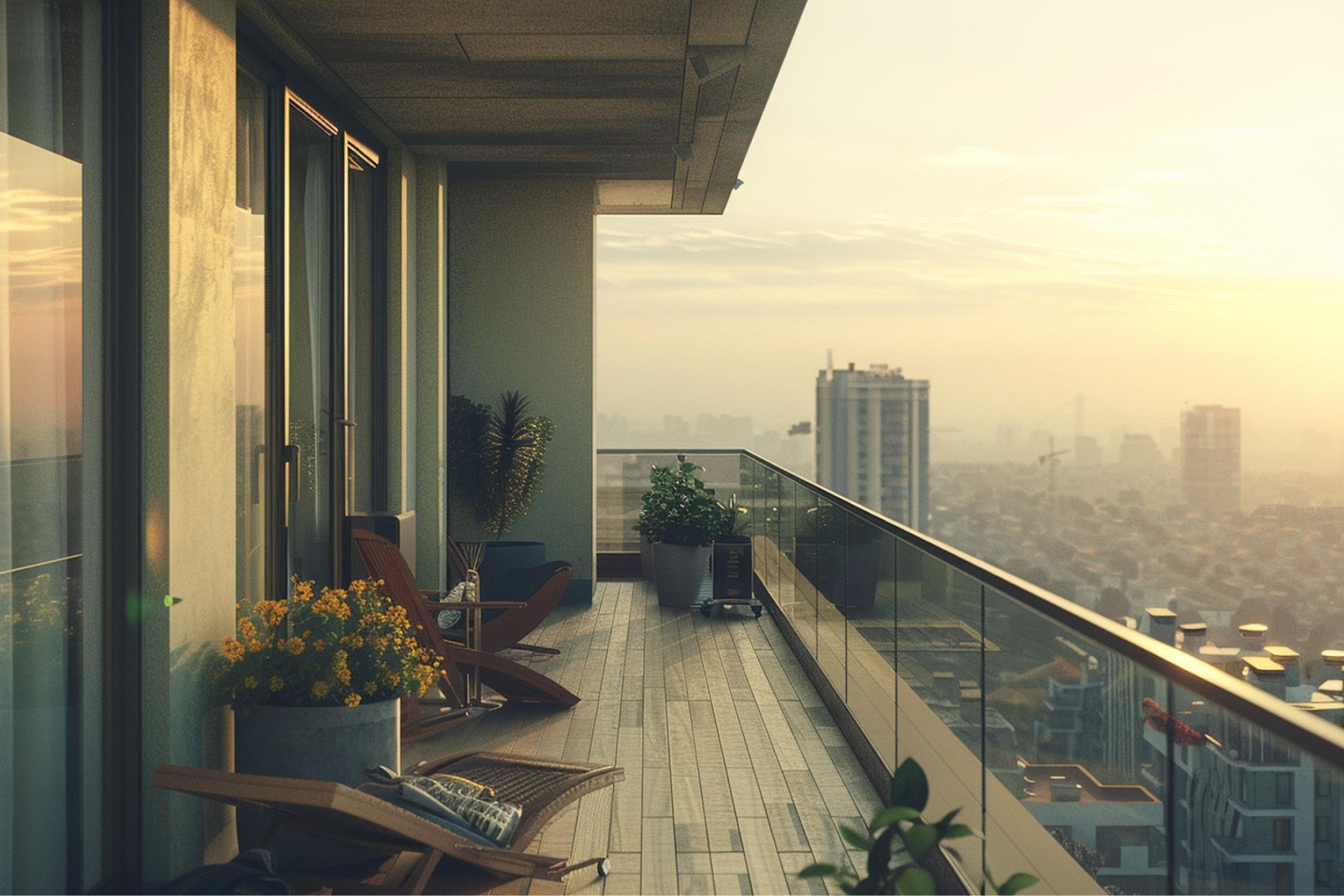
A balcony often looks like a bonus.
In brochures, it’s staged with a chair, a cup of coffee, maybe a plant or two. It feels like an extension of your living space, a place to relax, unwind, or step out for fresh air.
But in reality, not all balconies are truly usable.
Some end up being nothing more than a narrow ledge. Others become storage zones. And a few, only a few, actually become part of your daily life.
So what makes the difference?
The first thing to look at is depth, not just width.
A balcony that’s too shallow might technically exist, but it won’t comfortably fit even a chair. For a balcony to be usable, it should allow you to sit, move, and place something without feeling cramped.
If you can’t imagine spending 10-15 minutes there comfortably, it’s probably decorative, not functional.
A deeper balcony changes everything.
It allows for flexibility, a chair, a small table, maybe even a bit of movement. It creates a sense of space rather than a boundary.
Shallow balconies, on the other hand, tend to feel like edges rather than extensions.
Even a well-sized balcony can feel unusable if it lacks privacy.
If it directly faces another balcony at close distance, or if it’s fully exposed to neighboring views, people tend to avoid using it. Comfort comes from feeling at ease, not observed.
Design elements like side walls, offsets, or smart placement can make a significant difference here.
Where the balcony is located within the home matters more than most people think.
A balcony connected to the living room or bedroom is far more likely to be used regularly. One that’s awkwardly placed, say, off a utility space, often gets ignored.
Usability is closely tied to convenience.
A balcony that gets harsh afternoon sun may be difficult to use for most of the day. Similarly, one that lacks airflow can feel stuffy.
The best balconies strike a balance, good natural light, comfortable shade, and steady airflow.
This is something you can only understand during a real site visit.
The real question isn’t “Does this home have a balcony?”
It’s “Will I actually use it?”
A usable balcony becomes part of your routine, a place for a morning coffee, a short break, or even just a moment of fresh air. A decorative one stays unused, no matter how good it looks in photos.
Next time you step into a home, take a moment to assess the balcony:
Can you stand and move comfortably?
Is there enough depth for seating?
Do you feel at ease in terms of privacy?
Would you realistically spend time here?
If the answer is yes, you’re looking at a space that adds real value.
A well-designed balcony doesn’t try too hard to impress, it simply works.
And that’s the difference between a feature that looks good on paper and one that becomes part of your everyday life.



Buying a home is a major decision, and a site visit is one of the best opportunities to evaluate a property beyond brochures, floor plans and photographs.
By Hallmark | Oct'7 2026

Buying a home is one of the biggest financial decisions most people make. Naturally, the first number buyers look at is the purchase price. But the actual cost of owning a home does not end when the sale is completed.
By Hallmark | Sep'28 2026

When buying a home, it is natural to focus on the apartment itself. The number of bedrooms, the size of the living room, the amenities, the interiors, and the view can all influence the final decision.
By Hallmark | Sep'15 2026